2002 Austrian GP: Team orders hand Schumacher the win
Michael Schumacher won in Spielberg after Ferrari called off race leader Rubens Barrichello just before the flag. The fans booed.
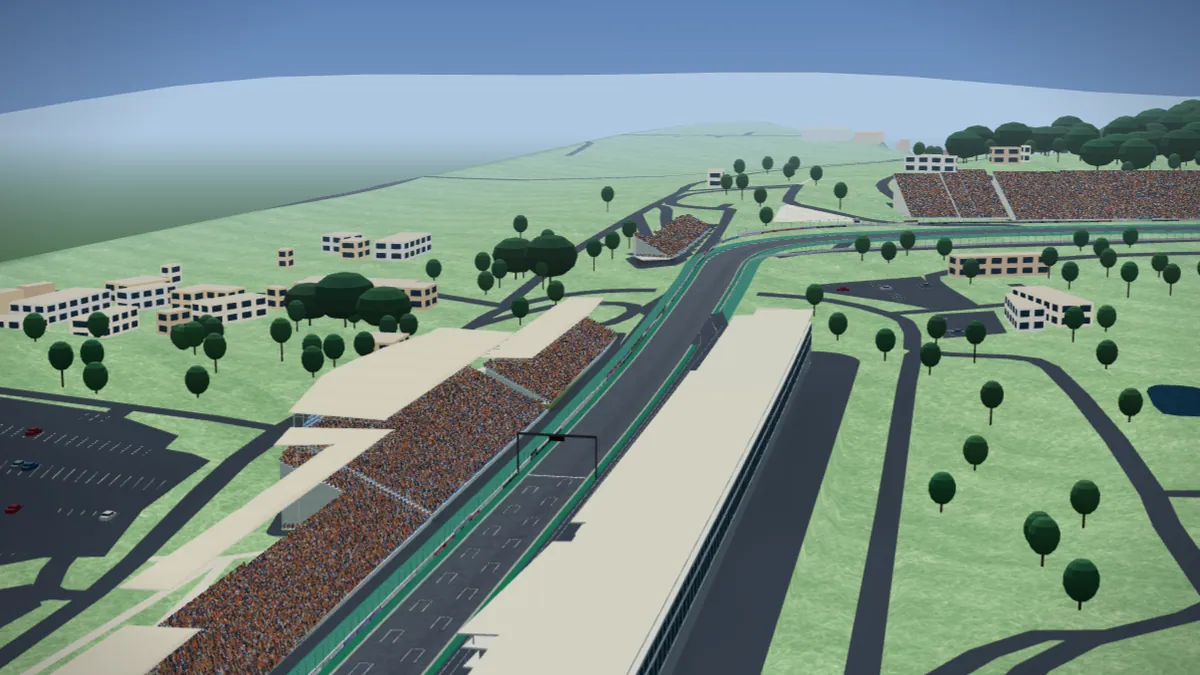
Created with AI based on our race data · responsible: Markus Ochmann
2002 Austrian GP: The key points
Michael Schumacher won the 2002 Austrian Grand Prix, but the race had really been won by his team-mate Rubens Barrichello. The Brazilian started from pole position and led almost the whole way. Then, just before the finish line, Ferrari told him from the pit wall to back off. According to the sources, only 0.182 seconds separated the two at the flag. Juan Pablo Montoya finished third for Williams. Rarely has a win in Formula 1 caused as much anger as this one.
The start at the A1-Ring: Barrichello leads, Heidfeld charges forward
The race was held at the A1-Ring in Spielberg, which was only renamed the Red Bull Ring in 2011. Barrichello was on pole, with Ralf Schumacher alongside him in the Williams. Michael Schumacher started third, Montoya fourth. Barrichello defended his lead into the first corner. Nick Heidfeld caused a stir: according to reports, he immediately took his Sauber a long way up the order from the third row of the grid.
Further back, things were chaotic. Pedro de la Rosa retired his Jaguar without completing a lap because of a throttle failure. In the opening phase, Jacques Villeneuve (BAR) collided with the two Arrows drivers Enrique Bernoldi and Heinz-Harald Frentzen. The sources differ on exactly how it happened. Bernoldi retired after two laps. Villeneuve later received a drive-through penalty for the incident with Frentzen. After just five laps, Kimi Räikkönen's race was also over when the engine of his McLaren went up in smoke. Two laps later, Felipe Massa retired the second Sauber with suspension damage.
Two Safety Car periods and Heidfeld and Sato's heavy crash
The first Safety Car period was triggered by Olivier Panis. After 22 laps, the Honda engine in his BAR gave up and the car stopped on the start/finish straight. Shortly after the restart came the most serious moment of the day. Heidfeld lost control of his Sauber under braking and slammed into the Jordan of Takuma Sato. There are two versions of the cause. According to Wikipedia, Heidfeld braked hard on cold brakes because he wanted to avoid the smoke from Alex Yoong's Minardi. Crash.net considered a suspension failure possible.
Heidfeld climbed out unaided. Sato was removed on a stretcher and flown to Graz for checks. According to Wikipedia, both suffered only minor injuries. This time the Safety Car stayed out for eight laps.
Strategy: Ferrari on two stops, Williams on one
The teams opted for different refuelling strategies. Ferrari planned two stops and brought both cars in during the first Safety Car period. Most of the other teams refuelled during the second, long neutralisation. Williams, by contrast, stuck to its one-stop plan. According to Crash.net, Montoya did without new tyres at that stop. That got him back out ahead of Ralf Schumacher, and he held the position to the flag even though his team-mate was quicker. At the finish, Montoya was 17.730 seconds behind the winner, Ralf Schumacher 18.448 seconds.
At the front, Barrichello stayed strong. According to Wikipedia, he made his second pit stop on lap 61, handing the lead to Michael Schumacher for one lap. After Schumacher's stop, Barrichello was back in front from lap 63. According to Crash.net, he had built a lead of around four seconds.
The team orders: Barrichello slows just before the line
In the final laps, team principal Jean Todt intervened over the radio. According to Motorsport Magazine, he told Barrichello: “This is one of the occasions we will have to ask you to move over.” Barrichello initially resisted and, according to Wikipedia, reminded Todt of his promise that he would never have to give away a win. At the A1-Ring in 2001 he had already been made to hand second place to Schumacher. The gap shrank nonetheless, and with one lap to go it was only about a second. In the final corner Barrichello lifted off, and Schumacher crossed the line first.
The spectators immediately understood what had happened. Whistles and boos came from the grandstands, from parts of the pit lane and even from the press room. On the podium, Schumacher looked visibly uncomfortable. He pushed Barrichello onto the top step and handed him the winner's trophy that Austrian Chancellor Wolfgang Schüssel had presented. Looking back in Motorsport Magazine, Doug Nye wrote that it was one of the most shameful interventions by a team principal in the history of Grand Prix racing.
Winners, losers and retirements at the Austrian GP
Behind the Ferraris, the winner of the day was Giancarlo Fisichella. He started 15th, gained ten places and finished fifth, scoring Jordan's first points of the year. David Coulthard took the final point in sixth place for McLaren, just ahead of Jenson Button in the Renault. Behind them came the two Toyota cars, with Mika Salo eighth and Allan McNish ninth. Also impressive: Mark Webber drove his Minardi from grid position 21 to twelfth place, a gain of nine places. Despite his drive-through penalty, Villeneuve was classified tenth, one lap down.
The losers were above all the Sauber and McLaren drivers:
- Kimi Räikkönen (McLaren): engine failure after 5 laps, from grid position 6
- Felipe Massa (Sauber): suspension after 7 laps, from grid position 7
- Nick Heidfeld (Sauber): collision after 27 laps, from grid position 5
- Olivier Panis (BAR): engine failure after 22 laps, from grid position 9
- Takuma Sato (Jordan): collision after 26 laps
- Eddie Irvine (Jaguar): hydraulics after 38 laps
- Alex Yoong (Minardi): engine failure after 42 laps
- Jarno Trulli (Renault): fuel pressure after 44 laps
Ralf Schumacher was also among the losers. He started second and had to settle for fourth place.
2002 standings after the Austrian GP and context
After six of 17 races, Michael Schumacher led the 2002 standings with 54 points. Montoya had 27 points, Ralf Schumacher 23. With his six points, Barrichello moved up two places to fourth and now had 12 points. In the constructors' standings, Ferrari led with 66 points ahead of Williams on 50 and McLaren on 14. According to Wikipedia, it was Schumacher's fourth win in a row and the 58th of his career.
It was precisely this dominance that made the team orders so incomprehensible to many. After the race, the world champion had twice as many points as the man in second. Todt justified the intervention by saying that retirements or accidents could still cost Schumacher the title. Context: the FIA World Council later fined Ferrari, Schumacher and Barrichello a total of one million dollars. However, the penalty was for breaching podium protocol, not for the team orders themselves. From 2003, team orders that influenced the result were banned. You can find all the figures on the race page for the 2002 Austrian GP.
The race in numbers
Charts and tables from our database (official result, lap data).
Positions lap by lap
Each driver's position at the end of every lap; the top ten finishers in colour.Places gained and lost
| Driver | Grid | Finish | Places |
|---|---|---|---|
| Giancarlo Fisichella | 15 | 5 | +10 |
| Mark Webber | 21 | 12 | +9 |
| Jacques Villeneuve | 17 | 10 | +7 |
| Jenson Button | 13 | 7 | +6 |
| Allan McNish | 14 | 9 | +5 |
| Michael Schumacher | 3 | 1 | +2 |
| David Coulthard | 8 | 6 | +2 |
| Mika Salo | 10 | 8 | +2 |
| Juan Pablo Montoya | 4 | 3 | +1 |
| Heinz-Harald Frentzen | 11 | 11 | 0 |
| Rubens Barrichello | 1 | 2 | −1 |
| Ralf Schumacher | 2 | 4 | −2 |
Championship before and after
| Pos | Driver | before | Points |
|---|---|---|---|
| 1 | Michael Schumacher | 1 (44) | 54 |
| 2 | Juan Pablo Montoya | 2 (23) | 27 |
| 3 | Ralf Schumacher | 3 (20) | 23 |
| 4 | Rubens Barrichello | 6 (6) | 12 |
| 5 | David Coulthard | 4 (9) | 10 |
| 6 | Jenson Button | 5 (8) | 8 |
| 7 | Nick Heidfeld | 7 (5) | 5 |
| 8 | Kimi Räikkönen | 8 (4) | 4 |
| 9 | Eddie Irvine | 9 (3) | 3 |
| 10 | Felipe Massa | 10 (3) | 3 |
Sources
Official classification on our race page
- Results and data – formel-1-livestream.de
- 2002 Austrian Grand Prix – Wikipedia
- Austrian GP 2002: Rubens robbed – Crash.net
- Doug Nye: The disgraceful F1 day Ferrari ordered Barrichello to let Schumacher win – Motor Sport Magazine